Currently Empty: ₹0.00


About Course
Electric Vehicle (EV) & Power Electronics is an interdisciplinary field that focuses on the design, control, and optimization of electric vehicles and the electronic systems that efficiently convert, control, and manage electrical power. It plays a vital role in sustainable transportation by improving energy efficiency, reducing emissions, and enabling advanced vehicle technologies.
Core Components
-
Electric Vehicle Technology: Covers electric motors, battery systems, charging infrastructure, regenerative braking, and vehicle control systems.
-
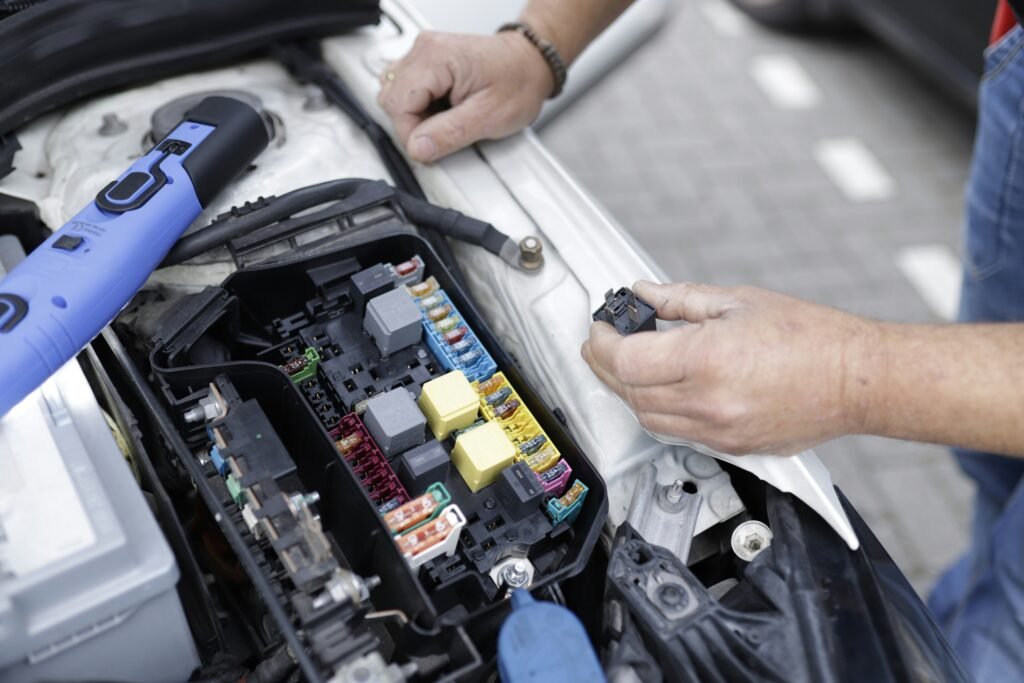
Power Electronic Converters: Devices such as DC-DC converters, inverters, rectifiers, and AC-DC converters are used to control and convert electrical power efficiently.
-
Battery Management System (BMS): Monitors battery health, state of charge (SOC), temperature, and safety to maximize battery performance and lifespan.
-
Motor Drives & Control: Controls electric motors (BLDC, PMSM, Induction Motors) using advanced control techniques to achieve efficient and reliable vehicle operation.
The EV & Power Electronics Development Process
-
System Design: Define vehicle requirements, power ratings, battery capacity, motor selection, and charging specifications.
-
Power Electronics Design: Develop converters, inverters, motor controllers, and battery management systems for efficient power conversion.
-
Simulation & Testing: Simulate electrical circuits and control algorithms, followed by laboratory and field testing for performance validation.
-
Integration & Optimization: Integrate batteries, motors, controllers, and charging systems while optimizing efficiency, safety, and thermal management.
-
Deployment & Maintenance: Deploy the EV system, monitor performance, update software, and maintain battery and power electronic components.
Common Use Cases
-
Electric Cars & Buses: Battery Electric Vehicles (BEVs), Hybrid Electric Vehicles (HEVs), and Plug-in Hybrid Electric Vehicles (PHEVs).
-
Electric Two & Three-Wheelers: E-bikes, electric scooters, and electric auto-rickshaws for urban transportation.
-
EV Charging Infrastructure: Fast-charging stations, smart charging systems, and wireless charging technologies.
-
Renewable Energy Integration: Solar-powered EV charging stations, energy storage systems, and vehicle-to-grid (V2G) applications.
-
Industrial Motor Drives: Variable-speed motor control in manufacturing, robotics, and automation.
-
Smart Grid Applications: Efficient power conversion, energy management, and grid stabilization using advanced power electronic systems.
Course Content
- Intermediate